3S Mechanical Supplies Medium Duty Fabric Racking for Hanakovi Factory, medium duty fabric rack, fabric storage rack, textile factory racking, fabric roll storage rack, industrial fabric warehouse rack
Fabric storage is a critical part of textile and garment manufacturing. A factory may handle hundreds or even thousands of fabric rolls with different materials, colors, widths, weights and production batches.
When fabric rolls are simply placed on the floor or stacked in large piles, warehouse operations can quickly become inefficient. Floor space is consumed, inventory visibility is reduced, picking takes longer and poorly supported rolls may be exposed to unnecessary pressure or deformation.
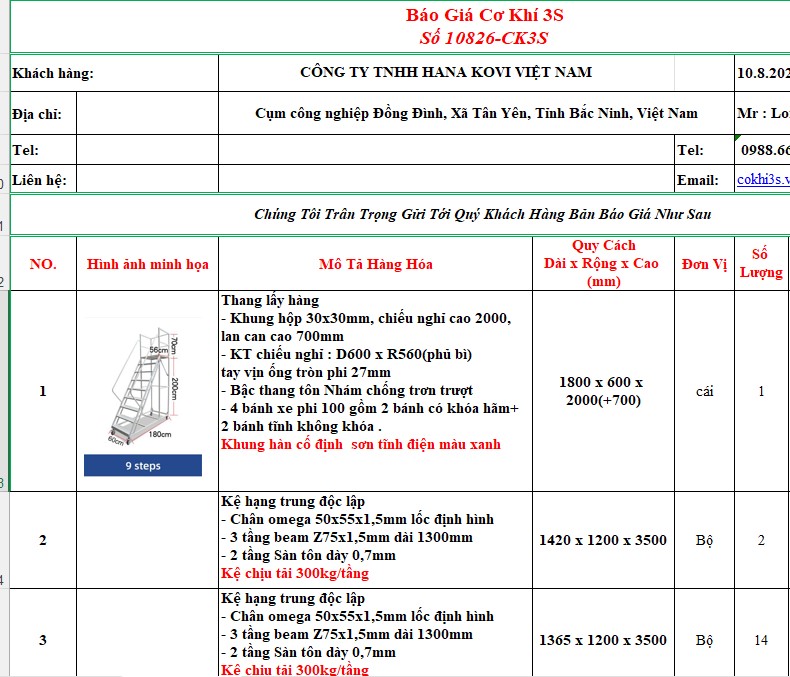
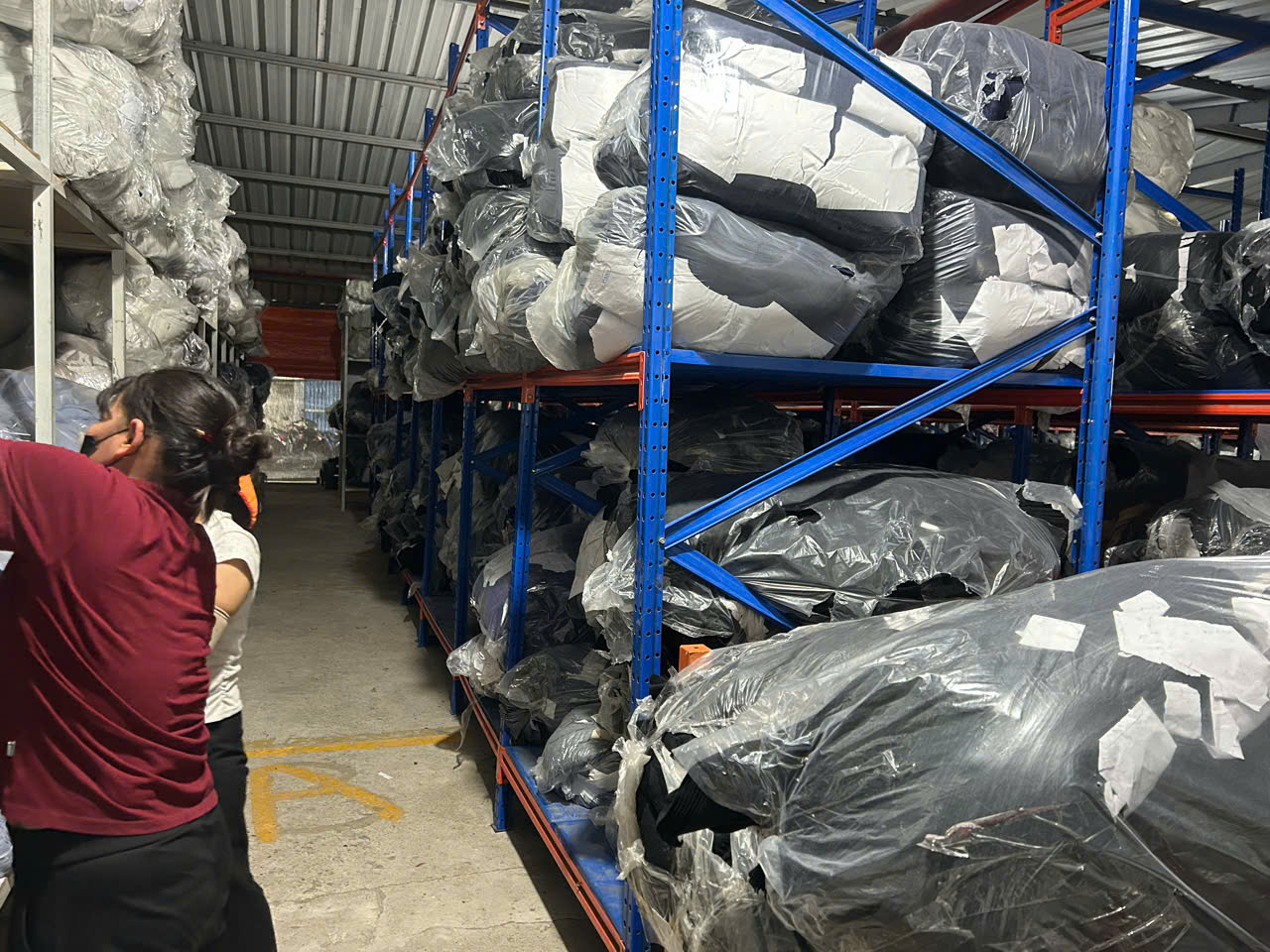
To address this type of requirement, Cơ khí 3S has developed and supplied medium duty fabric racking solutions, including the project for Hanakovi factory.
The objective is not simply to provide additional shelves. The rack system is intended to create a more structured fabric storage area while improving vertical space utilization, load handling and material accessibility.
Table of Contents
A Rack Designed Around Fabric Storage
Cơ khí 3S lists a dedicated medium duty fabric rack among its industrial storage products, alongside heavy-duty fabric roll racks and other warehouse systems.
The published configuration for its medium duty fabric rack includes approximately:
| Specification | Configuration |
|---|---|
| Dimensions | 2,000 × 1,500 × 2,000 mm |
| Levels | 4 |
| Upright | Omega 50 × 50 |
| Main beam | ZP72 × 2 mm |
| Center beam | H30 × 60 |
| Decking | 0.7 mm steel sheet |
| Deck reinforcement | Three reinforced panels |
| Capacity | Approx. 600 kg per level |
The configuration is particularly interesting because fabric rolls require a different storage approach from cartons or small spare parts.
Why Fabric Rolls Need a Dedicated Storage Approach
A fabric roll is long, cylindrical and relatively bulky.
If the rack is too shallow, the roll may extend beyond the supporting surface. If the shelf spacing is inappropriate, valuable vertical space may be wasted.
International fabric rack systems similarly use wider shelves and adjustable levels to accommodate fabric rolls horizontally. One commercial fabric-roll system, for example, uses adjustable shelf levels and smooth decking to make fabric rolls easier to slide on and off the shelf.
This demonstrates an important principle:
Fabric storage should be designed around the dimensions and handling characteristics of the fabric, rather than simply adapting a standard warehouse rack.
The Hanakovi Project: More Than Additional Storage
For a factory such as Hanakovi, the value of a medium duty rack system comes from improving the entire storage workflow.
A properly organized rack can divide fabric according to:
-
Fabric code
-
Material
-
Color
-
Production batch
-
Customer order
-
Production status
-
Incoming stock
-
Frequently picked materials
Instead of searching through large piles, warehouse workers can identify a specific storage position and retrieve the required roll directly.
This becomes increasingly important as the number of SKUs increases.
What International Textile Warehouses Can Teach Us
Recent textile-storage projects and industry discussions show that fabric warehouses face three recurring problems: space utilization, inventory visibility and protection of fabric rolls.
A specialized fabric storage project in Jiaxing, one of China’s major textile manufacturing regions, identified the need to protect sensitive textiles while maintaining rapid access to thousands of different SKUs.
Another recent discussion on fabric-roll storage highlighted two common problems: lower rolls can be crushed when rolls are stacked directly on top of one another, while loosely stored rolls can become difficult to identify and handle.
These observations are directly relevant to industrial fabric storage.
A rack therefore needs to provide more than load-bearing capacity. It should provide controlled support, visibility and accessibility.
Vertical Space Utilization
One of the strongest advantages of the Hanakovi medium duty rack solution is the ability to use vertical warehouse space.
Without racking, fabric storage largely consumes floor area.
With four storage levels, the same footprint can support multiple layers of inventory.
This is particularly useful when the warehouse has sufficient ceiling height but limited floor area.
The rack can therefore increase storage capacity without requiring the company to immediately expand the building.
Load Capacity and Structural Design
The published Cơ khí 3S configuration is rated at approximately 600 kg per shelf.
This is a significant capacity for a medium duty fabric-storage application.
However, a 600 kg rating should not be interpreted as permission to place 600 kg anywhere on the shelf.
Actual warehouse operation should consider:
-
Total roll weight
-
Load distribution
-
Roll diameter
-
Roll length
-
Number of rolls per level
-
Shelf spacing
-
Picking frequency
-
Handling equipment
A uniformly distributed load behaves differently from a concentrated load placed in one small area.
For this reason, warehouse operators should always follow the rack’s designed loading conditions rather than treating the published capacity as a universal figure.
Reinforced Steel Decking for Fabric Rolls
The rack configuration published by Cơ khí 3S uses 0.7 mm steel decking divided into three reinforced panels.
This is important for fabric storage because the roll should have an adequate supporting surface.
Poorly supported rolls can experience concentrated pressure points, while damaged or unsuitable supporting materials may affect packaging or the fabric itself.
Historical textile warehouse guidance has also documented cases where unsuitable pallet supports caused damage to packaging around textile goods.
The lesson is that rack design and warehouse operation should be considered together.
Why Medium Duty Instead of Heavy Duty?
Heavy-duty pallet racks are excellent for palletized goods and very high loads.
But a textile factory does not necessarily need the heaviest possible rack for every fabric-storage area.
If fabric rolls are manually picked or handled with relatively light equipment, medium duty racking can provide a more economical balance between strength and accessibility.
Cơ khí 3S generally describes medium duty racking in the 200–500 kg-per-level range, while its dedicated medium duty fabric configuration is listed at approximately 600 kg per level because of its specific structure.
The correct question is therefore not:
“What is the heaviest rack available?”
It is:
“What rack capacity and configuration match the actual fabric and warehouse operation?”
Medium Duty Fabric Rack vs. Other Storage Systems
Different textile warehouses require different systems.
| Storage system | Suitable application |
|---|---|
| Medium duty rack | Medium-weight rolls and manual picking |
| Selective pallet rack | Palletized fabric and direct access |
| Cantilever rack | Long and heavy rolls |
| Flow rack | Fast-moving materials requiring FIFO |
| Drive-in rack | High-density storage with fewer individual SKUs |
| Mobile rack | High storage density where floor space is limited |
A recent industry discussion on garment-warehouse storage similarly identifies selective racks for direct access, cantilever systems for long and heavy rolls, flow racks for FIFO operations and mobile racks where maximum storage density is required.
This means the Hanakovi project should be viewed in the context of its actual warehouse requirements rather than simply comparing rack types by load capacity.
Easier Inventory Management
One of the most important benefits of the system is not structural.
It is warehouse visibility.
A well-organized rack allows workers to know:
Where is the fabric?
How many rolls remain?
Which material was received first?
Which rolls should be issued to production?
Which fabric is currently reserved?
This becomes increasingly important when a factory handles many similar-looking fabric codes.
International textile-storage projects have highlighted exactly these issues, particularly the need for fast identification and retrieval when thousands of fabric SKUs are involved.
A Practical Balance for Hanakovi
The Hanakovi project demonstrates an important warehouse principle: storage efficiency is not simply about fitting the maximum number of rolls into the smallest possible space.
A highly dense warehouse can actually become inefficient if workers cannot quickly access individual rolls.
For fabric storage, the better objective is a balance between:
Storage density + accessibility + product protection + inventory visibility + handling efficiency.
Medium duty racking can provide that balance for many textile-factory storage areas.
Conclusion
The Cơ khí 3S medium duty fabric racking project for Hanakovi factory is a practical example of how industrial racking can be adapted to the requirements of textile material storage.
With a configuration of approximately 2,000 × 1,500 × 2,000 mm, four levels, reinforced steel decking and a rated capacity of around 600 kg per level, the system is designed to provide structured storage for fabric rolls while making better use of vertical warehouse space.
More importantly, international fabric-storage experience shows that the best warehouse is not necessarily the one with the highest storage density. It is the one where materials can be stored safely, identified quickly, retrieved efficiently and managed accurately.
For Hanakovi, the Cơ khí 3S medium duty fabric rack therefore represents a practical combination of load capacity, organized storage, accessibility and efficient use of factory space.